Reflow Medical announced the first six-month clinical results from a study of its Spur Elute sirolimus-eluting retrievable stent system.
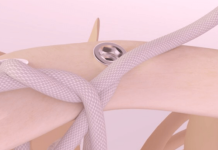
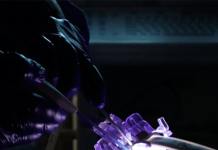
San Clemente, California-based Reflow designed its stent system to transfer a proprietary drug formulation to the diseased lesion without leaving a permanent metallic implant behind. The device’s retrievable scaffold therapy creates channels to increase the uptake of antiproliferative drugs. Meanwhile, it dilates the arterial lumen to maximize gain during the procedure. Doctors then remove the device without leaving anything behind.
Related: EmStop initiates IDE study of novel embolic protection device
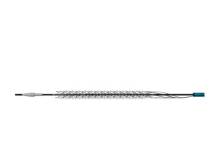
Reflow describes the stent as the first and only retrievable self-expanding stent with radially expandable spikes integrated with a balloon. Both have a drug coating with a unique sirolimus formulation.
Spur Elute already has FDA clearance for use in de novo or restenotic lesions following predilatation in below-the-knee (BTK) vessels. This treats infrapopliteal arterial disease.
Dr. Scott Harding presented results from the DEEPER CORONARY study at EuroPCR 2026 in Paris. It evaluated the company’s investigational stent for treating coronary in-stent restenosis. Outcomes included 100% freedom from major adverse cardiovascular events (MACE) and 100% freedom from all-cause mortality among nine treated subjects at six months.
Investigators observed improvement in CCS angina in all patients, with a median improvement of three classes.
Harding, the presenter of the data, said:
“The six-month data from DEEPER CORONARY provide encouraging acute and mid-term safety and efficacy results utilizing the investigational Spur Elute system. These early findings support the continued clinical evaluation of this retrievable, sirolimus-eluting stent approach in ISR and further potential for CAD treatment.”
Isa Rizk, CEO and co-founder of Reflow Medical, said:
“These encouraging results are an important milestone for our coronary program designed to benefit patients suffering from coronary disease. We thank Professor Harding, the investigators, and our partners for advancing this first-in-human study and the continued evaluation of the coronary Spur Elute.”