Australian medtech startup Oli has raised $6.5 million in a Series A3 funding round to accelerate the development of its maternal and fetal monitoring technology, designed to predict and reduce birth complications before they occur.
The Sydney-based startup was backed by Scale Investors, Clare Ventures, and the University of Sydney in the round.
Related: Vortex Imaging secures $12M for 3D imaging expansion
Following a $1.8 million Series A2 raise in 2024 and a $4.7 million Series A round in 2022, the closure of the recent Series A3 round brings Oli’s total private capital raised to $13 million, alongside more than $9.5 million in non-dilutive grants.
Oli, formerly Baymatob, was founded in 2018 by mechatronic engineer Dr Sarah McDonald following the traumatic birth of her second child, Oliver.
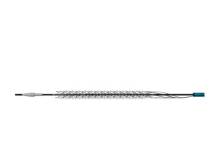
At its core, Oli is a wireless, wearable device that monitors maternal and fetal signs.
The company says the device can simultaneously capture millions of physiological data points across 10 maternal and fetal biosensors, without interrupting movement, position, or the natural progression of labour.
The data is then processed through the company’s patented Predictive Maternal-Fetal Signal technology, translating raw inputs into live clinical signals that update as labour progresses, identifying early patterns that precede serious complications.
The Maternal Intelligence Platform is designed to become more comprehensive with every birth Oli attends, as it aggregates data and signals across births, refining predictive accuracy further over time.
Oli aims to have the ability to analyse up to 15 conditions and complications across pregnancy and birth, including postpartum haemorrhage (PPH), fetal distress, stillbirth risk, and labour progression.
The company is on a mission to transform and improve health outcomes for all mothers and babies, says Oli CEO Tara Croft.
“There’s not just a select few mums that we’re trying to target. We’d love for our device to be in the hands of every clinician, every clinical team, and every mom around the world, regardless of your background or your socioeconomic status, regardless of where on the planet you live, and so that ultimately is our goal,” she told SmartCompany.
Croft says earlier detection and better monitoring can dramatically improve outcomes for fetal health, as well as complications such as postpartum hemorrhage, obstructed labour, preeclampsia, and cardiovascular disease in maternal health.
“There’s an immense amount of potential and opportunity in this space for early detection and early warning to quite genuinely transform maternal and fetal health around the globe,” she says.
“It’s been a space that has been under-researched and underfunded forever, actually, and it’s really exciting to be at the forefront of what is a very important area of human health, and a particularly impactful one.”
As well as accelerating the development of its technology, Oli plans to use the funds to support the completion of clinical trials underway across seven sites in Australia and the United States.
The funds will advance regulatory submissions with the Therapeutic Goods Administration (TGA) and the US Food and Drug Administration (FDA), as well as business operations, and the establishment of manufacturing operations and headquarters in Australia.
A commercial launch has been planned for both Australia and the US at the end of 2027.
Croft says this is the third capital raise Oli has done, and it will get the company through the completion of a 1000-patient pivotal clinical trial.
“It’s very large in medical devices land and we’ve almost completed that. We’re well in excess of 850 mums enrolled in that 1000 patient clinical trial today, and that clinical trial is being run in both Australia and in the US,” she says.
“So, in this study to date, we’ve had over 200 mums in Australia who have worn Oli, and every single one of those mums has contributed to us being able to validate the technology and bring it into the clinic and onto the bellies of mums for the future, so we can improve their health outcomes in the future.”
Croft says Australia is lucky to have such highly skilled clinicians and clinical teams.
“We want Oli to become this essential additional team member in the room that can signal what’s coming and supercharge their clinical capabilities,” she says.
“We’re definitely not trying to replace clinicians at all. We’re looking to complement and supercharge the capabilities that they already bring to the room in a really capable manner.”
The funding will also allow Oli’s current team of 15, which includes clinical, engineering, commercial and manufacturing members, to expand and grow further with new hires.