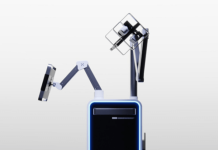
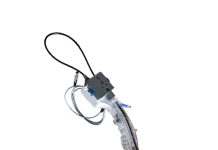
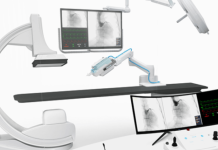
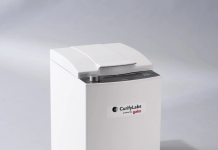
Corify Care announced that it received FDA clearance for its Acorys imageless, non-invasive cardiac mapping platform.
Madrid-based Corify designed its platform to provide a global, four-chamber view of cardiac electrical activity in real time. It combines high-resolution 3D anatomical models with real-time electrical activity to introduce true 4D mapping. This instant, whole-heart functional insight enables faster, safer and more predictable ablation procedures.
Related: AliveCor wins CE mark for 12-lead ECG
Corify designed Acorys to complement modern electrophysiology (EP) workflows and map complex arrhythmia mechanisms. This approach enables immediate functional insights without the need for pre-procedural imaging or the induction of unstable arrhythmias.
Acorys’ capabilities include single-beat, global cardiac mapping in an imageless workflow, requiring no CT or MRI. Non-invasive functional mapping complements standard catheter workflows, while the platform can rapidly identify arrhythmogenic substrate, including VT, complex atrial tachyarrhythmias or cardiac desynchronization.
Corify plans to present new data at the Heart Rhythm Society (HRS) conference in Chicago next week. FDA clearance adds to CE mark, which the company earned in 2024. The company plans to begin a phased U.S. rollout, partnering with leading EP centers to drive the adoption of its next-generation platform.
Andreu Climent, CEO of Corify Care, said:
“FDA clearance of Acorys is a defining moment—not just for Corify, but for the future of electrophysiology. For decades, EP has been limited by incomplete and time-intensive contact based mapping. Acorys changes the paradigm—by delivering immediate pre-procedural and inter-procedural, global insight that allows physicians to understand complexity, define targets, and act with confidence from the very first beat.”
Dr. Felipe Atienza, chief medical officer and co-founder of Corify Care, said:
“Acorys gives us something we’ve never had before—a complete understanding of the arrhythmia before we even start ablating. This has the potential to dramatically change how we approach complex cases, particularly in VT and Atrial Tachyarrhythmias.”