Sonomind announced that it raised $23.5 million (€20 million) in its Series A funding round led by Critical Path Ventures and Bpifrance.
The French startup specializes in non-invasive, painless therapy for mental illnesses using focused ultrasound. With the funding, it says it can now enter the clinical and industrial phases with its technology that targets depression.
Related: Apollo investment supports vVARDIS’s global Curodont expansion
Sonomind said the funding enables it to start clinical trials and collect evidence for its technology. It targets market authorization by 2029. The funding follows a $3.5 million (€3 million) seed round completed last year.
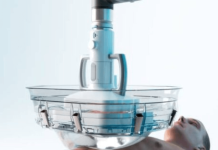
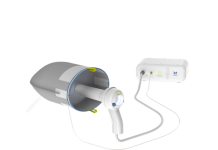
The Sonomind technology primarily targets treatment-resistant depression, using an approach that relies on low-intensity, focused ultrasound. It stimulates the areas of the brain involved in psychiatric disorders. Using a custom-made acoustic lens, the device precisely targets deep brain structures without surgery or implants. The company said its sessions can take place in outpatient settings as well.
Sonomind built its technology on 25 years of research conducted at the Institute of Physics for Medicine (Inserm, ESPCI Paris – PSL, CNRS), led by professors Mickael Tanter and Jean François Aubry. The company said initial clinical results published last year demonstrated a reduction of more than 60% in the severity of symptoms after five consecutive days of treatment, with no significant adverse effects reported.
Beyond depression, the company also hopes to bring its technology to other neurological and psychiatric conditions. Those include anxiety, addictions, Parkinson’s disease, essential tremor, post-stroke recovery and chronic pain.
Focused ultrasound is also used in therapy areas like cancer treatment platforms, like those developed by HistoSonics, EDAP and Sonire.
Jérémy Bercoff , CEO of Sonomind, said:
“Today, one in three people with depression do not respond to any available treatment. We refuse to accept this as inevitable. With focused ultrasound, we can offer them a real alternative: non-invasive, precise, and effective. This ambition has driven us from the beginning. This funding round gives us the means to prove it on a large scale.”