Boston Scientific announced that it invested $1.5 billion in transcatheter aortic valve replacement (TAVR) developer MiRus.
Marlborough, Massachusetts–based Boston Scientific now has an equity stake in MiRus worth approximately 34%. The deal also includes an exclusive option to acquire MiRus’ Siegel balloon expandable TAVR system, subject to additional payments and the completion of certain milestones. The option to acquire the business would include additional aggregate cash payments totaling $3 billion.
Related: Butterfly Medical raises $21M for Benign Prostatic Hyperplasia device
If exercised, MiRus would have the right to additional payments based on sales of Siegel over a specific period. Boston Scientific would also have an exclusive option to acquire mitral and tricuspid replacement valve assets from MiRus for an additional payment.
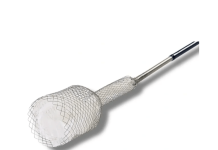
Siegel, an investigational system, features a low-profile delivery system and unique properties through proprietary nickel-free Rhenium alloys. Its dry porcine pericardial leaflets have anti-calcification treatment, and it has a pre-mounted valve on the balloon.
(Learn more about transcatheter heart valves in MassDevice’s Transcatheter Heart Valves Special Report. Go here to download the report for free.)
The company believes its design delivers high-yield strength, fatigue resistance and minimal recoil with precise delivery. MiRus says Siegel offers several firsts in TAVR, with its 8 Fr delivery sheath allowing less invasive procedures and broader patient access, particularly for women. As the only nickel-free THV system, it allows for the treatment of the 20% of Americans suffering from nickel allergies.
Siegel is currently under evaluation for treating severe, symptomatic aortic stenosis (AS). Other valves for AS include Edwards’ Sapien and Medtronic’s Evolut FX. Medtronic also has a similar agreement with Anteris Technologies, another balloon-expandable valve developer, having invested $90 million in the company earlier this year.
The investment in MiRus and potential Siegel acquisition could also kickstart a re-entry into the TAVR space for Boston Scientific, which discontinued its Acurate valve sales last year. Acurate’s discontinuation came five years after the company retired its Lotus valve program as well.
Boston Scientific expects an immaterial impact to adjusted EPS in 2026 related to the investment.
Lance Bates, EVP and president, Interventional Cardiology and Vascular Therapies, Boston Scientific, said:
“The occurrence and recognition of aortic stenosis is growing rapidly and our investment in MiRus continues our pursuit to bring a differentiated TAVR system into our portfolio that we anticipate may improve outcomes for patients living with this life-threatening disease. Built upon years of research and proprietary technology, we believe the distinctive design and impressive early clinical results of the Siegel valve may set it apart from currently available technology, potentially providing physicians an advanced option to treat a wide array of patients.”
Dr. Jay Yadav, founder and CEO, MiRus, said:
“The SIEGEL valve is a promising technology and has received enthusiastic feedback from physician investigators for its less invasive delivery, nickel-free construct, precise placement resulting from a lack of foreshortening and excellent hemodynamics. This collaborative relationship with Boston Scientific alongside the exceptional capabilities of our Atlanta-based team can further accelerate our progress towards broad accessibility for patients and physicians for what we believe will be a transformational treatment.”
Boston Scientific also said today that it entered into an accelerated share repurchase (ASR) agreement with JPMorgan Chase Bank.
The agreement totals $2 billion, as part of its previously announced $5 billion share repurchase authorization. Under the terms of the ASR, Boston Scientific will pay the repurchase price and receive common stock with an aggregate value of 80% of the repurchase price based on the closing share price of the company’s common stock as of May 15, 2026. That represents approximately 30.4 million shares based on the closing price that day of $52.68.
Boston Scientific expects to complete the repurchase by June 30, 2026. Once complete, the company will have $3 billion remaining under the repurchase authorization. It expects a 2¢ net impact to adjusted EPS in 2026, accretive to its previously issued guidance.
BTIG analysts Marie Thibault, Alexandra Pang and Sam Eiber maintain a “Buy” rating for Boston Scientific after the latest announcement.
The analysts say the company had already made a previous $100 million payment to MiRus as it now makes its third attempt at taking share in the TAVR market.
“We are surprised by the timing of this announcement but note that [Boston Scientific] had included tricuspid, mitral, and TAVR in its 2028+ pipeline initiatives laid out during its investor day last year,” the analysts said. “The technology appears promising but with a pivotal trial just getting underway, FDA approval is anticipated in late 2028/early 2029 and revenue is years away. We think investors may question the need to invest now, the valuation, and ability to compete in an already mature TAVR market with large, successful competitors.”