Australia-based OncoRes Medical has completed A$27m($19.1m) private funding round to support the clinical development and regulatory advancement of its quantitative micro-elastography (QME) imaging system, Elora.
The funding round saw participation from Brandon Capital Partners’ BB6 Fund, Radar Ventures, Morgans, The Table Club network, and Australian and international family offices.
Related: Berlin Heals raises $10M to expand its new less invasive approach
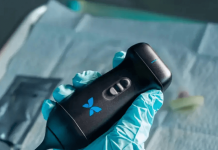
Elora delivers real-time analysis of tumours, enabling surgeons to identify and excise cancerous tissue with accuracy. It is designed to enhance outcomes in breast-conserving surgery (BCS) and may cut the frequency of repeat procedures for breast cancer patients.
It also enables detailed, real-time intraoperative tumour cavity assessment.
The company has initiated a clinical trial involving six hospitals located in Western Australia and Victoria. The study aims to recruit over 110 breast cancer patients and represents the first interventional use of the Elora device.
Elora received the US Food and Drug Administration (FDA) breakthrough device designation in 2020, which is designed to accelerate the development and approval of devices addressing life-threatening conditions, supporting expedited approval and reimbursement upon clearance.
The Elora probe generates micro-scale 3D maps of mechanical and optical properties following excision during BCS.
These imaging maps enable surgeons to detect residual cancerous tissue, allowing for more thorough removal of microscopic or non-palpable tumours left in the breast cavity.
As part of its initiative toward regulatory approval and commercialisation in the US market, OncoRes has appointed Renee Ryan as a new board member.
OncoRes Medical CEO Dr Katharine Giles said: “This injection of capital represents a strong endorsement of our technology and its potential to positively impact so many lives.
“The funding will be immediately deployed to support our Australian clinical trial, together with product development, regulatory milestones and manufacturing for our US pivotal trial.
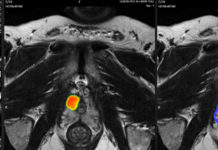
“We will also expand the team and progress proof-of-concept work for this technology in other cancer types, including prostate cancer, which is deeply exciting.”