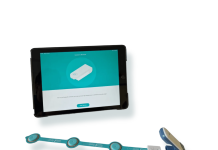
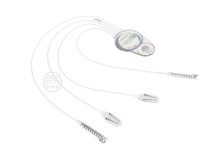
Bioliberty, a healthtech startup transforming the delivery of physical and occupational therapy, announced that it raised $10.2 million financing. The funds will enable the company to continue the development and U.S. commercialization of its transformative Lifehub Clinic platform, which will incorporate new computer vision and care coordination capabilities. The funds will also enable the commercialization of Lifehub Home to facilitate ongoing physical therapy and progress tracking in patient homes after in-person therapy ends.
Related: Imperative Care secures $100M for stroke care tech commercialization
The financing includes a recent $8.2m Series A investment led by a $4m investment from the Scottish National Investment Bank (“the Bank”), alongside participation from existing investors Archangels, Eos Advisory, Old College Capital, and Hanna Capital SEZC, as well as new investor Conduit Connect. This follows a $2m pre-Series A round in mid-2025 from the existing investor group. As part of this financing, Russell Bailey, PT, FACHE, President of Lifepoint Rehabilitation and Dana Prommel Strauss, DPT, Lead Director, Public Policy and Government Affairs, CVS Health join the company’s Board of Directors, bringing deep experience in post-acute care across the U.S. healthcare system.
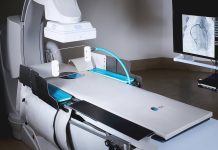
Since launching its flagship product, Lifehub Clinic, in mid-2025, Bioliberty has seen strong clinical adoption of the solution which uses AI and robotics to monitor functional recovery and augment high-intensity therapy delivery in post-acute care settings. The company’s technology now supports patients in several of the largest post-acute care providers in the U.S., including through multicenter partnerships with the third largest rehabilitation provider in the country, and Sheltering Arms Institute. It also continues research and development activities through collaborations with the Abilities Research Center at Mt. Sinai, and the IDEAS Center for Innovation at the U.S. Department of Veterans Affairs’ Central Virginia VA Health Care System.
“Our team is pleased with the initial success of Lifehub Clinic in the U.S. market, helping post-acute care providers improve patient outcomes through intelligent therapy delivery and discharge planning that incorporates functional data. We look forward to leveraging the expertise of our expanded Board of Directors to further the impact of this work,” said Rowan Armstrong, co-founder and chief executive officer at Bioliberty. “With this investment, we are expanding how we measure functional recovery through computer vision and AI-driven assessments to build the predictive capability of our product, and to commercialize a system extending those insights into the home.”
Bioliberty’s enhanced capabilities arrive at a critical juncture as physical function and mobility emerge as essential “vital signs” in the transition to value-based care. In value-oriented payment models, such as CMS’ Transforming Episode Accountability Model (TEAM), objective functional data becomes a prerequisite for protecting provider margins, securing shared savings and improving patient outcomes. Currently, patients whose physical function is not accurately assessed before discharge face a three-fold higher risk of hospital readmission. By providing actionable, objective measures of mobility, Bioliberty enables clinicians to identify high-risk patients, track recovery trajectories, and make data-driven discharge decisions that ensure both clinical excellence and financial stability.