Medical Microinstruments (MMI) announced the completion of the first robotic-assisted procedure in its REMIND U.S. IDE study.
REMIND evaluates microsurgical intervention for neurodegenerative disease. MMI received FDA investigational device exemption (IDE) to conduct the study in November 2025. A multidisciplinary team at Baptist Health in Jacksonville, Florida, performed the initial case in a participant with moderate Alzheimer’s disease with confirmed abnormalities in their deep cervical lymph node (dCLN) region.
Related: CVRx enrolls first patient in study of Barostim therapy for heart failure
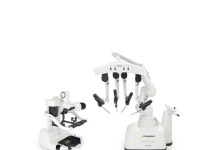
The first-of-its-kind trial evaluates the safety and feasibility of the Symani surgical robot in microsurgery in the region of the neck.
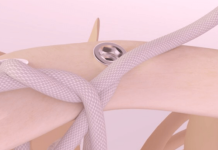
Symani allows surgeons to connect lymphatic vessels to nearby veins. By connecting the vessels, smaller than several strands of hair, the procedure helps reroute fluid and relieve swelling. Medical Microinstruments touts Symani as the only microsurgical robot approved for commercial use. It won FDA de novo clearance for Symani, covering soft tissue manipulation to perform microsurgery, in April 2024.
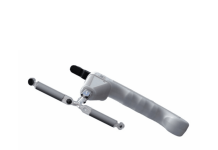
Symani provides advanced solutions for a range of open surgeries. That includes post-mastectomy breast cancer reconstruction, extremity reconstruction using free tissue transfer and lymphatic system repair. The NanoWrist instruments help to access and suture small, delicate anatomies. Additionally, the company has debuted new instruments and sutures within the last six months.
MMI said its initial procedure in REMIND explores whether restoring lymphatic drainage pathways in the dCLNs may support improved clearance of harmful neurotoxins that scientific researchers believe contribute to the progression of Alzheimer’s disease.
The company’s novel approach brings together a dedicated team with expertise across reconstructive microsurgery, neurology, neuroradiology and neurosurgery.
MMI expects its first-of-its-kind study to enroll 15 patients and follow them through 12 months post-procedure.
“This is a historic first and important step in advancing a potential breakthrough intervention for neurodegenerative disease,” said Mark Toland, CEO of MMI. “By evaluating novel microsurgical robotic techniques, we’re building on a decade of global research that moves science closer to what could become a life-changing treatment option for the tens of millions of Alzheimer’s patients and caregivers globally.”