Senseonics announced new data from a real-world study demonstrating the sustained performance of its Eversense 365 CGM.
Real-world evidence demonstrated the long-term performance and positive impact of the world’s first year-long continuous glucose monitor (CGM). The company shared findings at the 19th International Conference on Advanced Technologies & Treatments for Diabetes (ATTD) in Barcelona.
Related: Arsenal Medical announces first patient treated with ResQFoam
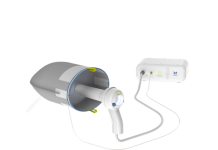
Eversense 365, an implantable system, rests under the skin for the duration of a year. Users can change its external, silicone-based adhesive daily with almost no skin reactions.
Senseonics launched Eversense 365 with its global distribution partner, Ascensia Diabetes Care, in October 2024. It has since taken over full commercial activity for the technology. The system also received clearance as an integrated CGM (iCGM) system, meaning it can work with compatible medical devices. Those include insulin pumps as part of automated insulin delivery systems. Senseonics launched its system with the Sequel Med Tech twiist pump earlier this year.
In the study shared at ATTD, Senseonics said its CGM delivered strong patient adherence, glucometrics and hypoglycemic outcomes. It also delivered comparable adherence and outcomes between the first and second six-month period. This indicated high accuracy and performance from a single sensor implant over an entire year.
“The promise of a year-long CGM has now been demonstrated in the real world,” said Dr. Francine Kaufman, chief medical officer at Senseonics. “Since Eversense 365 was launched in the U.S., we have consistently heard positive feedback about the system and its impact from both patients and their healthcare providers. Today, we have presented real-world evidence that further validates our belief in this technology and what we are hearing from the diabetes community. The data demonstrate that Eversense 365 can perform exceptionally well and consistently across its entire lifespan, with strong adherence supporting a full year of positive glycemic outcomes with just one sensor.”
A look at the outcomes shared by Senseonics
Strong adherence and positive outcomes
Senseonics’ study evaluated the first 5,059 Eversense 365 sensors used by U.S. patients on open-loop insulin regimens.
Patients using the CGM had an average transmitter wear time of 93.8%, delivering comparable results over the two six-month periods. Investigators observed a mean glucose management indicator (GMI) of 7.14% and a mean time in range (TIR) of 66%. The company said this demonstrated effective glycemic control, as GMI provides an estimated A1C measurement using only CGM data. A lower value indicates better management and reduced health risks.
More than 75% of Eversense 365 users achieved hypoglycemic targets, reinforcing the system’s accuracy in low glucose ranges. In these ranges, errors can have the greatest impact on patient safety and treatment decisions, Senseonics says.
Benefits across age groups
Senseonics also shared an analysis by age, demonstrating positive glucometrics from Eversense 365 users across all age groups.
Glycemic outcomes improved with increasing age, the company said. The population greater than 65 years old achieved a mean GMI of 6.99% and a mean TIR of over 70%, with more than 85% achieving hypoglycemic targets. Investigators observed this trend with adherence, too, with over 95% average wear time in that age group.
Senseonics said that findings suggest that, while all age groups can benefit from its CGM, there may be particular benefits and positive outcomes in older populations.
Additionally, the analysis suggested that Eversense 365 could provide specific benefits to young adults (aged 18-25) who typically have poorer glycemic control. This group had a mean GMI of 7.3% with a mean wear time over 90%.
Early analysis of automated insulin delivery combination
Senseonics also shared real-world data from the first (approximately) 120 people using Eversense 365 and twiist two weeks after the full commercial rollout of the integrated offering. Users evaluated used the combined system for more than seven days.
The company saw “extremely encouraging” glucose outcomes, with a mean GMI of 6.79%, mean TIR of 77% and time in hypoglycemia of 2.7%. All figures met international consensus targets.
Senseonics said that initial data suggests an early, but positive clinical impact from the combined sensor and pump. The company plans to share a longer-term real-world analysis later this year.
“We are proud to present these data at ATTD, which is always a fantastic opportunity to connect with the diabetes ecosystem and discuss the latest developments in technology and care,” said Brian Hansen, chief commercial officer at Senseonics. The meeting is particularly timely for us this year following the recent CE mark approval and upcoming launch of Eversense 365 in select European markets. We are gaining momentum commercially in the U.S. and look forward to bringing the benefits of this unique, implantable CGM to new patients and geographies.”