Science Corporation announced that it closed an oversubscribed $230 million Series C financing round.
Lightspeed Venture Partners, Khosla Ventures, Y Combinator, IQT and Quiet Capital, among others, participated in the round. It brings the company’s total capital raised to approximately $490 million since its founding in 2021.
Related: Polares Medical raises $50M for heart leaflet replacement system
Alameda, California-based Science plans to use the funds to accelerate the commercialization of its brain-computer interface (BCI) technology. The company, led by Neuralink co-founder Max Hodak, is progressing its Prima retinal implant through clinical trials.
Science owns the Prima retinal implant technology developed by Pixium Vision. The Prima System, a photovoltaic substitute of photoreceptors, holds FDA breakthrough device designation. It provides simultaneous use of the central prosthetic and peripheral natural vision.
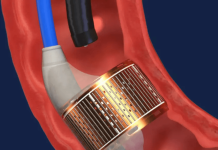
Prima restores vision by directly activating the retina if rods and cones have been lost. It features a small light-powered implant placed under the retina and a special pair of glasses. The glasses have an embedded camera and infrared projector that sends light signals to the implant to provide power and data.
Science submitted Prima for commercial availability in the U.S. and Europe in June. In October 2025, the company reported positive outcomes for users of the Prima implant.
“We are building a company which will offer patients hope beyond the limitations of traditional medicine,” said Hodak, cofounder and CEO of Science. “By engaging the brain directly as an information processing organ, we are able to achieve much greater effect sizes and drive unprecedented clinical impact. We are deeply committed to research and new technologies that can provide treatment options where none existed before – and which will fundamentally change and improve lives.”
Science expects to become the first BCI company with a vision restoration product on the market with a planned European launch this year. It said the Series C comes amid strong investor demand ahead of future milestones for the company.
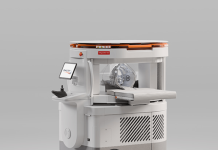
The company also plans to use funds to support the advancement of its Biohybrid neural interface technology and Vessel perfusion system. Its Biohybrid architecture aims to connect to the brain while avoiding the damage and limitations of putting wires into the brain. The Vessel platform reimagines the way ECMO (extracorporeal membrane oxygenation) works.
Additionally, Science expanded its PRIMA clinical trial program assess other retinal diseases. Those include Stargardt disease and retinitis pigmentosa, which both can cause inherited retinal vision loss in young adults.
Meanwhile, the company awaits CE mark in Europe and FDA approval in the U.S. It would be the first vision-restoring BCI to market, while Neuralink, Hodak’s former BCI company, is also developing a vision-restoring implant.
“The strength and caliber of this syndicate reflects both the urgency of the problems we are addressing and the credibility of our execution so far,” said Darius Shahida, Science chief strategy officer. “With this capital, we are focused on commercialization and delivering real-world clinical impact. Our imperative is to become the first BCI company to scale and achieve profitability.”