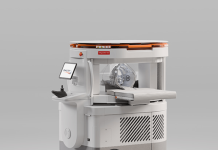
Kandu Health announced positive results from the first randomized controlled trial of its brain-computer interface (BCI) therapy.
The trial evaluated its FDA-cleared, non-invasive IpsiHand BCI system in chronic stroke survivors. It detailed outcomes from a post-market randomized controlled study evaluating the clinical performance of IpsiHand. IpsiHand received FDA clearance in 2021 as a breakthrough-designated, 510(k)-cleared device for stroke rehabilitation.
Related: CorTec announces successful second human implantation of its BCI system
Dr. Eric Leuthardt presented findings at the International Stroke Conference (ISC) 2026 in New Orleans.
Findings demonstrated that users of the IpsiHand system achieved significantly greater improvements in upper extremity motor function than those participating in a home exercise program.
IpsiHand comes out of a collaboration and subsequent merger between Kandu, a former Imperative Care spinout, and Neurolutions. The technology enables non-invasive at-home rehabilitation for stroke survivors affected by chronic motor deficits. IpsiHand accelerates motor recovery of the affected upper limb after chronic stroke.
The study compared at-home BCI-enabled therapy using IpsiHand with a conventional at-home exercise program. Patients completed assigned therapy five times per week over a 12-week period. Participants were at least six months post-stroke with persistent upper extremity hemiparesis or hemiplegia, with no upper or lower limits on baseline Upper Extremity Fugl-Meyer (UEFM) scores.
Kandu enrolled 62 total participants, stopping enrollment early for efficacy after a planned interim analysis. It featured 37 using BCI therapy and 25 in the control.
Patients who received BCI therapy showed a mean improvement of 6 points on the UEFM scale, compared to 1.5 points in the control. Investigators say the average improvement in the group exceeded the Minimal Clinically Important Difference (MCID) of 5.25. That indicates functional gains considered meaningful to patients.
More than half of the BCI patients (55.5%) achieved a clinically meaningful response, compared to 9.6% in the control.
“This data fundamentally challenges the long-standing belief that recovery after stroke permanently plateaus after the first few months,” said Leo Petrossian, CEO of Kandu, Inc. “For decades, patients living with chronic stroke have been told that what they regain early on is all they can expect. This randomized trial shows that with the right technology—delivered at home, without the burden of frequent clinic visits—meaningful recovery is still possible years after stroke.”