FeelTect has kicked off a clinical trial in Ireland to evaluate its wearable, pressure-sensing device for vein ulcers.
Researchers at the University of Galway will evaluate Tight Alright, the company’s system for remotely monitoring sub-bandage pressure applied during compression therapy for venous leg ulcers (VLUs).
Related: Data supports Boston Scientific Watchman FLX in stroke reduction
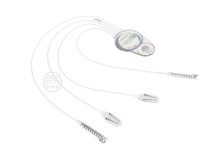
Tight Alright includes a small, wearable device that sits under a patient’s bandage. The device measures pressure at three points on the lower leg and sends information wirelessly to a mobile app. This app shows real-time pressure readings and sends data to a secure cloud database for a healthcare team to monitor.
Spiddal, Co. Galway-based FeelTect believes its technology supports more consistent compression application. It could improve healing rates, reduce treatment costs and enhance quality of life.
FeelTect plans to follow 40 patients out to 90 days, comparing how ulcers heal using Tight Alright compared to standard VLU treatment.
The trial comes through partnership between FeelTect and the University of Galway, supported by funding through the Government’s Disruptive Technology Innovation Fund, managed by the Department of Enterprise, Trade and Employment and administered through Enterprise Ireland.
Commentary from FeelTect officials and trial leaders
Dr. Andrew Cameron, CEO of FeelTect, said:
“We are delighted to see the commencement of this valuable research, assessing data-driven, connected-health solutions for improving the treatment of venous leg ulcer patients. FeelTect is extremely fortunate to be working with our valued partners in University of Galway, including the Institute for Clinical Trials and Clinical Trials Corrib Research Centre, as well as world class clinicians, ensuring the quality and successful execution of the study. The broader implications of the study relate to the optimisation of compression therapy – a fundamental, first-line treatment for a host of venous and lymphatic diseases.”
Professor Fidelma Dunne, director of the Institute for Clinical Trials, University of Galway, said: “This trial reflects the role of the Institute for Clinical Trials as a national centre of excellence in the design and delivery of innovative studies. By integrating decentralised, patient‑centred approaches, we are strengthening Ireland’s clinical research capabilities and supporting the national objective to retain and grow trial activity. Through the Government’s DTIF support, this collaboration with an Irish start-up demonstrates how innovation developed in Ireland can be tested, validated and scaled within our own health system through academic-industry collaborative partnerships.”