Boston Scientific announced new findings from the CHAMPION-AF trial supporting its Watchman FLX system.
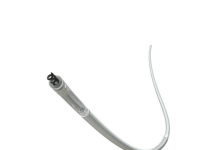
Watchman FLX, Boston Scientific’s left atrial appendage closure (LAAC) device, reduces the risk of thromboembolism from the LAA in patients with non-valvular AFib. The device aims to reduce stroke risk in such patients who need an alternative to oral anticoagulation therapy. The next-generation FLX devices feature a polymer coating, visualization markers and a broader size matrix. The company says this design helps to treat a wider range of patients.
Related: iPerf enrolls first patient in study of dual-flow femoral artery cannula
CHAMPION-AF compared Watchman FLX to non-vitamin K antagonist oral anticoagulants (NOACs) as a first-line option for stroke risk reduction. It evaluated the system in a broad population of patients with non-valvular AFib. The study met all primary and secondary safety and efficacy endpoints.
Investigators shared findings at the American College of Cardiology’s Annual Scientific Session & Expo (ACC 2026) in New Orleans. They simultaneously published findings in The New England Journal of Medicine.
According to Boston Scientific, AFib increases stroke risk by five times compared to normal heart rhythms. In patients with NVAF, more than 90% of heart-related blood clots form in the LAA, the company says. It designed Watchman to permanently close off the LAA in a single procedure.
CHAMPION-AF enrolled 3,000 patients with NVAF who were suitable for oral anticoagulation therapy across a broad spectrum of stroke and bleeding risk. It took place across 141 sites in the U.S., Canada, Europe, Japan and Australia.
At 36 months, the study met its primary safety endpoint, as Watchman FLX proved statistically superior to NOACs. Investigators saw 10.9% non-procedural major and clinically relevant non-major bleeding in the Watchman FLX group. This compared to 19% in the NOAC group, marking a 45% relative reduction in non-procedural bleeding risk.
The secondary safety endpoint positioned Watchman FLX as statistically non-inferior to NOACs at 36 months for procedural and non-procedural major bleeding (5.9% vs. 6.4%). A secondary combined safety and efficacy endpoint highlighted a net clinical benefit. Watchman FLX demonstrated superiority to NOACs in cardiovascular death, stroke, systemic embolism and non-procedural major bleeding and clinically relevant non-major bleeding.
Boston Scientific reported that the study met its primary efficacy endpoint, defined as occurrence of stroke, cardiovascular or unexplained death or systemic embolism. Watchman FLX achieved statistical non-inferiority compared to NOACs (5.7% vs. 4.8%).
The company said the study represents the largest trial comparing an LAAC device to NOACs for patients with NVAF to date. It saw a 99% procedural success rate as well. Boston Scientific plans to continue the trial through five years with additional primary and secondary endpoints.
Boston Scientific Chief Medical Officer, Atrial Fibrillation Solutions, Dr. Brad Sutton, said:
“These positive data, which have the potential to support updated clinical guidelines globally, will be used in our submission to expand the indication and coverage for the well-established Watchman platform as a first-line stroke risk reduction option, providing physicians with more choices in care for a wider range of patients who have atrial fibrillation. Today, 40% of patients with AF who are prescribed blood thinners for stroke risk reduction are not taking their medications consistently, significantly increasing their risk of stroke. The CHAMPION-AF data add to Boston Scientific’s robust body of clinical evidence supporting the Watchman device as a one-time implant that helps provide stroke risk protection over a patient’s lifetime.”
Dr. Martin Leon, study co-chair and Mallah Family professor of cardiology, chief innovation officer and director, Cardiovascular Data Science Center, Columbia University Medical Center, said:
“The success of the landmark CHAMPION-AF trial represents a meaningful milestone that will undoubtedly transform the treatment approach to stroke risk reduction in a broader population of patients who historically have needed to rely on medication. These results should give clinicians confidence in the potential of the Watchman FLX device to become a first-line treatment option for reducing the risk of stroke for a rapidly growing number of patients with AF.”