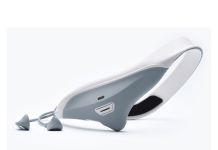
Biotronik announced the successful first-in-human implantations of its LivIQ leadless pacemaker system.
The implants came in Australia as part of the company’s BIO|CONCEPT.LivIQ study, a premarket clinical investigation designed to evaluate the system’s preliminary safety and performance. Dr. Paul Gould of Princess Alexandra Hospital (Brisbane) and Dr. Stewart Healy and Dr. Emily Kotschet at Victorian Heart Hospital (Melbourne) completed the initial cases. According to Biotronik, the physicians came away highlighting the system’s “superior handling.”
Related: Robocath launches first-in-human study of next-gen robot for coronary artery disease
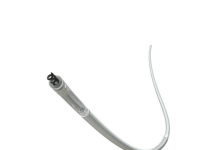
Healy and Kotschet noted the periprocedural visibility of both the device and delivery system. In a news release, they labeled the visibility of the tines and tether as “excellent,” along with the “intuitive” and “easy to use” delivery system.
“I was extremely impressed with how easy the delivery system was to use,” Gould added. “It enables accurate and stable positioning with an added ability to simply reposition if required.”
Biotronik designed its leadless pacing system to use atrial electrical far-field sensing. The company says it would represent the world’s first intracardiac pacemaker to do so. It enables atrioventricular (AV)-synchronous pacing at rest and during exercise with a single cardiovascular implantable electronic device (CIED).
The company says it designed the system to simplify implantation through intuitive handling and improved procedural visibility. It aims to provide reliable rate adaptation without compromising device longevity.
Should Biotronik eventually bring its LivIQ system to market, it could challenge current leadless pacemaker leaders Abbott and Medtronic.
“We plan to move into the global pivotal study in the coming months,” said Andreas Hecker, chief technology officer at BIOTRONIK. “Introducing DX technology to leadless pacing represents a major step forward in bradycardia therapy, and we are excited to bring it to patients worldwide soon.”